
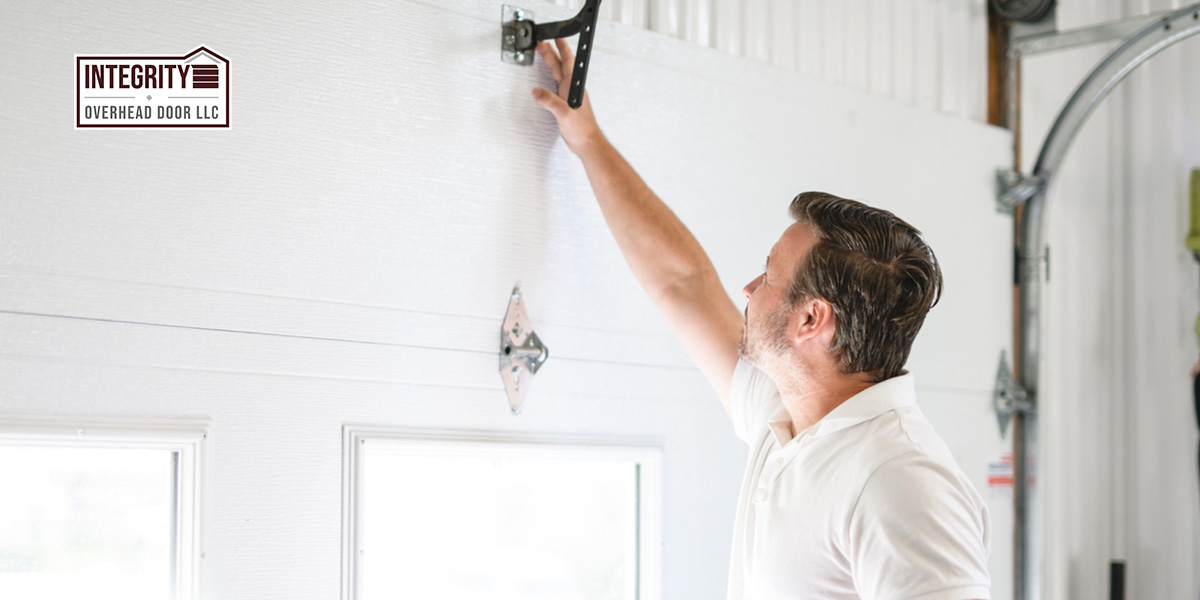
As the long winter days draw to a close in Northwest Arkansas and spring cleaning starts in earnest, don’t forget about your garage doors. Frigid, icy weather can damage your home in ways you might not anticipate, and you’re responsible for ensuring yours remains in optimal condition. Use this spring garage door checklist to get all the components back in top shape.
The Importance of Post-Winter Garage Door Maintenance
Overlooking your garage door’s needs as spring arrives can leave your door vulnerable to a range of seasonal issues. Here are some benefits of giving your system a thorough check.
- Prevents major repairs: Inspecting your garage doors after winter lets you spot and fix minor problems before they escalate into extensive and costly repairs.
- Enhances safety and security: Your garage doors are safer to operate when you maintain them regularly. Fixing the components affected by winter weather significantly reduces the risk of accidents that can lead to severe injuries or death. Also, well-maintained garage doors offer enhanced security against intruders.
- Promotes longevity: Garage door spring maintenance proactively extends the garage door’s lifespan by preventing premature wear and tear.
- Improves efficiency: Well-maintained garage doors will perform at peak efficiency throughout the spring.
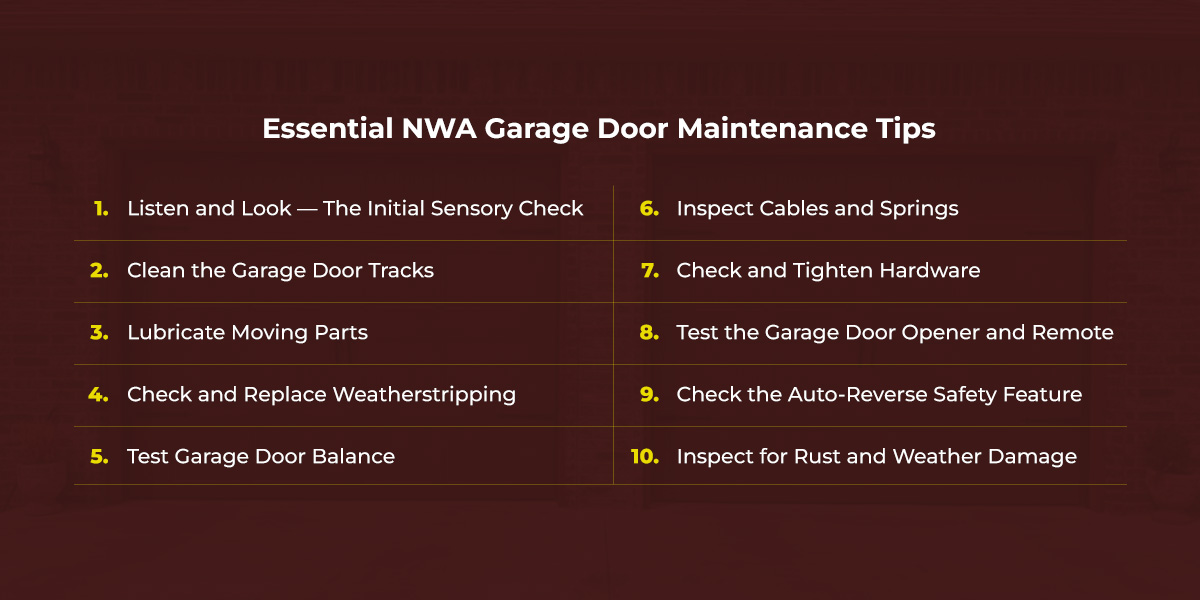
Essential NWA Garage Door Maintenance Tips
Here are 10 valuable tasks to add to your post-winter garage door care routine.
1. Listen and Look — The Initial Sensory Check
Before starting your garage door spring cleaning, open and close the door, listening closely and paying attention to visual cues as you do so. Here are some vital indications to pay attention to.
- Sounds: Grinding, squeaking, rattling and scraping are telltale signs of varying issues with components in your garage door. For instance, squeaking could suggest that the hinges and rollers need lubrication. Similarly, scraping or grinding may result from debris in the tracks.
- Visual indicators: Inspect cables, rollers and springs, looking for visual indicators such as slanting and uneven alignment, cracks, rust and other physical damage that can tamper with the door’s structural integrity.
If you notice anything unusual, proceed carefully. Garage doors are heavy, tensioned systems, and most homeowners don’t have the tools or experience needed to service them safely. While you might feel comfortable completing small, simple tasks, call a professional for anything involving springs, cables, tracks or major hardware. Trained professionals can safely address significant damage and ensure the door operates reliably.
2. Clean the Garage Door Tracks
Winter exposes garage door tracks to dirt and debris. With these in the way, the rollers will struggle to move smoothly along the track, making it difficult to open and close the door. Additionally, dirty tracks can lead to noisy opening and closing.
To clean your door tracks, wipe them thoroughly with a damp cloth to remove dust and grime. Lubricating clean tracks attracts more dirt, so leave them alone during the next step of this checklist.
3. Lubricate Moving Parts
Cold, snow, moisture and salt can cause metal parts to stiffen, leading to increased friction and reduced mobility of your garage door. Lubricating the spring, rollers and hinges will prepare your door for frequent use as the weather warms. Lubrication reduces friction, allows moving parts to function as intended and leads to quieter operations.
Here are some tips for proper lubrication.
- Ensure safety first: Before doing anything else, switch off the power supply to the garage door opener to prevent it from moving as you work on the parts.
- Use the proper lubricant: For the best results, use high-quality lithium grease or silicon spray. Note that WD-40 contains harsh cleaning solvents and isn’t an ideal long-term garage door lubricant.
4. Check and Replace Weatherstripping
Weatherstripping shields your garage from water and other outdoor conditions, but winter temperatures can make the rubber brittle and prone to cracking. To check for damage, close the door and look for light coming through the bottom or sides. If you spot gaps, immediately replace the weatherstripping to maintain a proper seal.
5. Test Garage Door Balance
Accumulated snow and ice along the bottom seal or door panels add extra weight to the garage door, possibly imbalancing it. Testing your door balance after winter will help you detect these issues early and fix them before they get worse.
- Lift the door: Disconnect the opener, manually lift the door halfway and slowly let go.
- Interpret the results: The springs are likely under the wrong tension if the door slams shut or shoots up. You’ll need professional help to fix these issues.
6. Inspect Cables and Springs
Winter temperature fluctuations can make your door’s cables and springs brittle and prone to cracking. Inspect these components for damage or wear and tear as you prepare for spring. Call a professional if you notice anything amiss. Since garage door cables and springs operate under high tension, mishandling them can cause severe injuries. Repairs involving these components demand expertise and extreme caution, so don’t attempt to turn it into a DIY project.
7. Check and Tighten Hardware
Bolts, screws and other metal components contract in cold weather, which can cause them to loosen faster and become misaligned. These issues will result in rattling and increased strain on the door components. Checking and tightening your door hardware is an essential garage door maintenance tip that ensures it operates safely, smoothly and efficiently in the spring.
8. Test the Garage Door Opener and Remote
Garage door openers and remote controls may malfunction due to issues like ice buildup, frozen lubricants and battery drain. As the weather warms, test your openers and remote controls to confirm whether they are still responsive or need repair. Call the pros if your troubleshooting attempts fall short.
9. Check the Auto-Reverse Safety Feature
Harsh winter conditions may affect your garage door’s sensors, so you should check the auto-reverse safety feature before spring rolls around. To test this feature, place a piece of wood on the threshold and hit the close button. Under normal conditions, the door should immediately reverse when it hits the object in its way. If it doesn’t work correctly, you may have a problem with the auto-reverse safety feature, which necessitates professional repairs.
10. Inspect for Rust and Weather Damage
Humidity and spring storms in Northwest Arkansas can accelerate rusting on steel doors and contribute to wood rot. Inspect your garage door for rust spots or peeling paint. If your door has minor rust spots or flaking paint, you can apply rust-inhibiting primer to the affected areas or repaint them.
Schedule Professional Maintenance With Integrity Overhead Door
Spring is the ideal time to start fresh, and you don’t want a garage door problem slowing you down. While you can start working your way through this checklist independently, maintaining a safe, efficient garage requires professional expertise.
Integrity Overhead Door’s reliable garage door maintenance services in Northwest Arkansas addresses a wide range of issues, including those caused by winter weather. Schedule an appointment today to get professional help with repairs, maintenance and replacements.